

One of the greatest and most interesting modes in amateur radio is CW. If not THE most interesting mode.
With low or even very low power, contacts can be made over long distances.
Do you still remember your first CW QSO?
I do! It was pure hell when a station answered my CQ call. On the one hand, of course, I had hoped for an answer; on the other hand, I was completely overwhelmed by the situation and at that moment forgot everything I had learned before. That was the end of the “anatomy of a CW QSO”. With beads of sweat on my forehead and a pulse beyond all reason, I tried to copy the other station’s Morse code. Sending CW myself was no problem, but copying under “real” conditions was hell!
The worst part, however, was that the other station did not react to my “PSE QRS”. I was able to copy 13 wpm, but not 17 wpm or faster. The end of the story: after that QSO I never wanted to touch a key again.
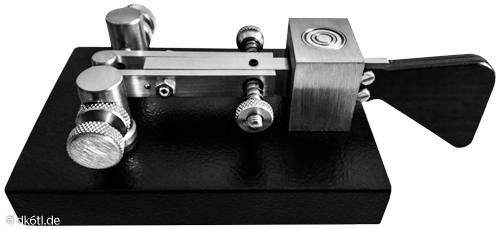
It took more than half a year until, thanks to my good friend Hermann (DF4HI), a member of the HSC, I held the key in my hand again. He pushed me and kept reminding me how hard it had been for him at the beginning. “At some point it goes ‘CLICK’ in your brain, and it comes all by itself. Don’t stress yourself. And never try to copy individual characters.”, he said. “And ignore the people who don’t want to slow down!! But please don’t give up CW. You’ll regret it!”
Today CW is “normal” for me. Of course there are still many moments when I don’t get words or callsigns right away, but that’s life. The most important thing is not to give up when things don’t go the way you’d like. Then you simply switch off and try again tomorrow. And with every successful CW QSO, no matter how slow, the fun factor goes up!!!
By the way: ALL CW operators started slowly! Even the fastest of them!
And many CW operators may still remember their first CW QSO…